Published in the Sydney Morning Herald (16/9/2010) in response to the report of unreliable nuchal translucency testing as a prenatal indicator of Down syndrome:
The most distressing aspect of the study of Down syndrome tests is that the researchers appear heartlessly unconcerned that more than 90 per cent of children who test positively are aborted (''Down syndrome tests performed inaccurately by 45% of operators", September 15). Children at risk of abortion because of Down syndrome have human rights. Each child at risk of abortion because of a disability is entitled to rights protection ''before as well as after birth'', as recognised by the Universal Declaration of Human Rights.
Under the UN Convention on the Rights of Persons with Disabilities, Australia agreed to protect children at risk of arbitrary deprivation of life because of their disabilities; to provide them with prenatal as well as post-natal care; to institute education programs that foster respect for them as part of human diversity and humanity; and to combat stereotypes, prejudices and harmful practices perpetrated against them.
It would be hard to find a more harmful practice than the promotion of Down syndrome testing.
Rita Joseph Hackett (ACT)
And this response to Rita Joseph was published by the Sydney Morning Herald today (17/9/2010):
A lifelong struggle is too much to bear
Rita Joseph (Letters, September 16) does not address the experience of raising children with a serious intellectual disability. It is often accurately described as ''rewarding'', but less publicised are the struggles of parents who are demoralised, exhausted, emotionally and financially overstretched, and who juggle the needs of a disabled child with those of their neurotypical offspring.
Some intellectually disabled children make extraordinary gains, which lead to fulfilling and even largely independent lives. But others require permanent care and assistance in such basic tasks as dressing, feeding and toileting. For many parents, the biggest worry is who will take care of their children as they age.
Especially while government assistance for disabled people and their carers remains in such a parlous state, it is hard to blame parents for deciding to terminate a Down syndrome pregnancy, sparing themselves decades of heartache and uncertainty. Those who have not made such a decision are in no position to judge.
Thea Gumbert Alexandria

Friday, 17 September 2010


Thursday, 16 September 2010
Library Thursdays: Out in the web
 Paediatrician and father, Len Lenshin's website, http://www.ds-health.com/ is a great source of information on health topics related to Down syndrome. He has also compiled a list of over 200 sites on the Internet dealing with Down syndrome. There are often little gems hidden in these websites. Here's a couple of Down syndrome association websites that have some useful information.
 The Down Syndrome Association of Greater Cincinnati has a few very good things on their website:
 - A general newsletter plus newsletters for educators as well as healthcare professionals
- Friendship network - a social networking website for adults with Down syndrome
- Siblings booklet (Down Syndrome Association of Greater Cincinnati)
- An extensive library
Down Syndrome Association of Central Texas have a nice manual for educators on inclusion, a booklet, All About Me, to help teachers get to know your child, their interests, strengths and skills and Inclusion Solutions newsletter for teachers with tips to promote inclusion.

Another couple things worth mentioning on the web are the recorded webcast of the Siblings talk done by Brian Skotko and Susan Levine (authors of Fasten Your Seatbelt: a crash course on Down syndrome for brothers and sisters--available from the library) as part of the Children's Hospital Boston Allen C. Crocker Lecture Series.
The next live talk webcast will be on Tuesday, 28th Sept. at 9:00 a.m - 10:30 a.m. Sydney time (27/9/10 7:30-9:00pm Boston time). It will be on Obstructive Sleep Apnea in children with Down syndrome by Dr. Dennis Rosen.
Skotko and Levine can also be seen in a Youtube clip discussing a sibling's question: Why do people stare at my brother or sister? It looks like they may be planning to do a series of these judging from Skotko's website's blurb about it.

Lastly, we are looking forward to receiving our copies of the new book by the authors of Mental Wellness, Brian Chicoine and Dennis McGuire: The guide to good health for teens and adults with Down syndrome. Woodbine House's website has a preview of the first chapter, Understanding Common Issues That Affect Health Care. Let us know if you'd like to reserve a copy when the book comes in or if you'd like to borrow anything else.
Wednesday, 15 September 2010
Prenatal Down syndrome test performed inaccurately by 45% of operators
An Australian audit of the accuracy of local operators offering nuchal translucancy testing as a prenatal screen for Down syndrome is reported in the press today
Down syndrome test performed inaccurately by 45% of operators, Amy Corderoy, Sydney Morning Herald, September 15, 2010
Some pregnant women may be unaware their baby has Down syndrome because almost half the operators certified to carry out a common screening test are not performing it accurately …... read the full news report here
The abstract of the research article, published by the Australian and New Zealand Journal of Obstetrics and Gynaecology article free online, but if you want the full text, you have to purchase access.
Citation:
NISBET, D. L., ROBERTSON, A. C., SCHLUTER, P. J., MCLENNAN, A. C. and HYETT, J. A. , Auditing ultrasound assessment of fetal nuchal translucency thickness: A review of Australian national data 2002–2008. Australian and New Zealand Journal of Obstetrics and Gynaecology, no. doi: 10.1111/j.1479-828X.2010.01207.x
Down syndrome test performed inaccurately by 45% of operators, Amy Corderoy, Sydney Morning Herald, September 15, 2010
Some pregnant women may be unaware their baby has Down syndrome because almost half the operators certified to carry out a common screening test are not performing it accurately …... read the full news report here
The abstract of the research article, published by the Australian and New Zealand Journal of Obstetrics and Gynaecology article free online, but if you want the full text, you have to purchase access.
Citation:
NISBET, D. L., ROBERTSON, A. C., SCHLUTER, P. J., MCLENNAN, A. C. and HYETT, J. A. , Auditing ultrasound assessment of fetal nuchal translucency thickness: A review of Australian national data 2002–2008. Australian and New Zealand Journal of Obstetrics and Gynaecology, no. doi: 10.1111/j.1479-828X.2010.01207.x
Professor Ron McCallum re-elected to prestigious United Nations position
Professor Ron McCallum, of Sydney, has been re-elected to the United Nations Convention on the Rights of Persons with Disabilities Committee.


Professor McCallum, a prominent labour law academic, was the first totally blind person to have been appointed to a full professorship in any field at any university in Australia or New Zealand.
The Minister for Disability Services, Peter Primrose, said that Professor McCallum was the only candidate elected on the first secret ballot, which indicated the high regard in which he is held by the international community.
“On behalf of the Government and the people of NSW I congratulate Professor McCallum on his latest achievement.”
Professor McCallum is the only Australian serving on a UN Treaty body.
He was elected to the Committee for a four year term and will continue to chair the Committee, a position to which he was unanimously elected a year ago, until the end of 2012.
Before becoming the foundation Blake Dawson Waldron Professor in Industrial Law in the Faculty of Law of the University of Sydney in 1993, Professor McCallum taught at York University in Ontario, at Duke University in North Carolina and at Monash University.
In July Professor McCallum was appointed interim Chair of the NSW Disability Council.
In 2006 he was made Officer in the Order of Australia for his services to tertiary education, for industrial relations advice to governments, for assistance to visually impaired persons and for social justice.
Tuesday, 14 September 2010
Physical and mental health promotion for people with an intellectual disability: a workshop

The Centre for Disability Studies is hosting a workshop for families, service Providers and other professionals, presented by Dr Seeta Durvasula and Ms Rachel Dickson.
This interactive workshop examines the ways that families, support workers and other professionals can promote physical and mental health in people with intellectual disability.
9.30 am - 4.00 pm
Monday 11th October 2010
Cost: $50 for family members
Charles Blunt Conference Room
Royal Rehabilitation Cnetre Sydney, 59 Charles St, Ryde
Phone 8878 0500 email mcarrick@med.usyd.edu.au for further information, or to register. Click here for a flyer and registration form to return by mail or fax.
In the papers ....
News that my baby had Down Syndrome was like a 'scary movie' but our little Mary is doing just fine, Evening Herald (Ireland), 13th September, 2010
Journalist and TV presenter Brendan O'Connor has spoken for the first time about the birth of his baby daughter, who was diagnosed with Down Syndrome.
The outspoken writer and his wife Sarah Caden welcomed a second baby girl, Mary, into their family just two weeks ago .... read the full story here, and a more expansive version here, in the Sunday Independent.
Gran hails "hero" grandson after dislocating false hip, Bucks Free Press (UK), 7th September 2010:
A boy with Down’s Syndrome rushed out of the house to get help for his grandmother who was paralysed with pain after dislocating her artificial hip.
Plucky young Lewis Taplin, 9, who lives near his grandmother in Downley dashed over the road to alert neighbours.
“He’s my hero,” said his relieved grandmother Carmelina Taplin, 67 .... read the full story here
Journalist and TV presenter Brendan O'Connor has spoken for the first time about the birth of his baby daughter, who was diagnosed with Down Syndrome.
The outspoken writer and his wife Sarah Caden welcomed a second baby girl, Mary, into their family just two weeks ago .... read the full story here, and a more expansive version here, in the Sunday Independent.
Gran hails "hero" grandson after dislocating false hip, Bucks Free Press (UK), 7th September 2010:
A boy with Down’s Syndrome rushed out of the house to get help for his grandmother who was paralysed with pain after dislocating her artificial hip.
Plucky young Lewis Taplin, 9, who lives near his grandmother in Downley dashed over the road to alert neighbours.
“He’s my hero,” said his relieved grandmother Carmelina Taplin, 67 .... read the full story here
Monday, 13 September 2010
Online registration and sponsorship for Buddy Walk - Australia 2010

A note on self-esteem ....
.... from the Adult and Teen Down Syndrome Clinic in Illinois, brought to you by the authors of Mental Wellness in Adults with Down Syndrome, and the soon-to-be-released The Guide to Good Health for Teens and Adults with Down Syndrome.
There's lots of good information linked to the Clinic's Facebook page
There's lots of good information linked to the Clinic's Facebook page
Friday, 10 September 2010
$8.5 US million to study aging and dementia in adults with Down syndrome
A large grant to the highly regarded and experienced Kennedy Kreiger Institute in Baltimore will add to knowledge about dementia in older people with Down syndrome, by supporting a further five years of work on research that has been ongoing since 1987. Read the Kennedy Kreiger news release here.
This work is in addition to a five year project on dementia and Down syndrome recently announced by the University of Kentucky.
For Australian guidelines on Alzheimer's disease and Down syndrome, click here.
This work is in addition to a five year project on dementia and Down syndrome recently announced by the University of Kentucky.
For Australian guidelines on Alzheimer's disease and Down syndrome, click here.
Thursday, 9 September 2010
Library Thursdays: Managing my money
 Everyone needs to know how to manage their money and people with Down syndrome are no exception. Most find this very challenging. Woodbine House has recently published a book, Managing my money: Banking and budgeting basics by Natalie Hale, to make learning these skills easier.
The book is designed to be used by a teacher or parent together with a student. The teacher notes are at the start of each chapter and the student pages follow in a larger type. Much thought has been put into making the book simple and as visually and conceptually conducive to learning as possible. There are many colourful illustrations to break up the text. The spiral binding makes it easy turn the page back to focus only on the concept on one page. The tasks have broken down into small components. The ledgers have used colour-coding with a standard, although enlarged, format that is used throughout.
A CD is included which allows printing of these visually understandable forms.
The first part teaches about keeping records. Envelopes are used for incoming money (plus) and receipts of expenditures (minus) and then these are recorded on the ledger sheets.
The second part looks at budgeting and understanding needs, wants and savings.
The third part discusses how to keep a cheque account. This is probably the least useful section for Australians. It is possibly not necessary for people with Down syndrome to learn how to use a cheque account. These days most bills can be paid online, purchases are made with cash from an ATM or with a debit card. There is a short lesson on debit cards, but more of this would have been better.
At first glance, the book looks a little overwhelming. But the author gives plenty of instructions for using it and advice for how to expand each section to provide plenty of practice and repetition to understand each concept before moving on. The only other problem for Australians is that the dates are taught in month/day format, so that would have to be changed before using it so that it wouldn't be confusing. Despite these quibbles, I think the book is a great resource which has addressed the learning needs of people with Down syndrome. Money management skills are extremely useful in increasing one's independence, so this is a great help towards attaining those skills.
Contents, excerpts and other information at Woodbine House website.
If you'd like to borrow this book or anything else, please call us or email.
Wednesday, 8 September 2010
What makes me: Australia Council for the Arts invites participation
What makes me is a project developed by the Australia Council for the Arts and invites us all to think about what art adds to your lives. 12 Australians have participated in producing personal "art cubes" demonstrating the scope of the project on its website. Amongst them is Digby Webster, a young man with Down syndrome who is involved with several projects through Accessible Arts. Digby's art cube is here. Digby's cube includes photos, graphics and a short video of him a work, and performing with hip hop dancers, First Flight Crew.
All Australians can participate - instructions are on the project's website, that allow you to construct your own art cube, to post to your website. "As everyone's cubes are combined, we will gradually be building Australia's largest collaborative digital story."
If you decide to make an art cube with or about someone with Down syndrome, please let us know so that we can post a link .... and we'll have a go at making our own.
All Australians can participate - instructions are on the project's website, that allow you to construct your own art cube, to post to your website. "As everyone's cubes are combined, we will gradually be building Australia's largest collaborative digital story."
If you decide to make an art cube with or about someone with Down syndrome, please let us know so that we can post a link .... and we'll have a go at making our own.
Tuesday, 7 September 2010
EXHIBITION APPLICATIONS INVITED: AART.BOXX 2011
Accessible Arts and Sydney College of the Arts will present a national exhibition of recent works by contemporary visual artists with disability. The exhibition will build on the success of the Accessible Arts led initiative and exhibition program, titled AART.BOXX.The exhibition will be held at SCA Gallery in October 2011.
The selected works for this exhibition will aim to challenge the current discourses within contemporary art by highlighting art practices that are informed by cultures of disability.
Applications are open to Australian artists with disability. Applications for pre-selection close Friday 8 October, 2010. Download application here
For further information contact Josie Cavallaro, Arts Development, on 02 9251 6499 (ext 5) or email jcavallaro@aarts.net.au
The selected works for this exhibition will aim to challenge the current discourses within contemporary art by highlighting art practices that are informed by cultures of disability.
Applications are open to Australian artists with disability. Applications for pre-selection close Friday 8 October, 2010. Download application here
For further information contact Josie Cavallaro, Arts Development, on 02 9251 6499 (ext 5) or email jcavallaro@aarts.net.au
Monday, 6 September 2010
CP blogs are back
CP Blogs, a suite of blogs maintained by the Spastic Centre of NSW has returned. They are not exclusively related to matters relevant only to those with Cerebral Palsy (CP) - you will find some very worthwhile posts here:
The Scene - posts focus on news, events, activities
Hey Dad - Rodney Clarke posts about his expereinces as Dad to a son with CP. There is much for other fathers to appreciate too.
The Scene - posts focus on news, events, activities
Hey Dad - Rodney Clarke posts about his expereinces as Dad to a son with CP. There is much for other fathers to appreciate too.
Sunday, 5 September 2010


Saturday, 4 September 2010
UK researchers uncover secret of pregnancy problems in older women
News release from the Life Science Centre, Newcastle University (UK):
Scientists are a step closer to understanding why older women are more likely to produce abnormal eggs, increasing the risk of infertility, miscarriage and birth defects, such as Down’s Syndrome.
The research has been carried out against the backdrop of dramatically increased cases of Down’s Syndrome pregnancy caused by the growing trend for women to postpone having babies until their late thirties and early forties.
While it has long been known that the increased risk of abnormalities in older women is due to eggs containing wrong number of chromosomes, the underlying causes have remained a mystery. Research published today in the journal Current Biology, sheds new light on why this happens.
The key is declining levels of proteins called Cohesins, which hold chromosomes together by entrapping them in a ring. This is essential for chromosomes to split evenly when cells divide.
Read on here for the full news report.
Citation (in Press)
Lisa Martine Lister, Anna Kouznetsova, Louise Ann Hyslop, Dimitrios Kalleas, Sarah Louise Pace, Jaclyn Catharina Barel, Abinaya Nathan, Vasileios Floros, Caroline Adelfalk, Yoshinori Watanabe, Rolf Jessberger, Thomas B. Kirkwood, Christer Höög, and Mary Herbert (2010) Age-Related Meiotic Segregation Errors in Mammalian Oocytes Are Preceded by Depletion of Cohesin and Sgo2, Current Biology, doi:10.1016/j.cub.2010.08.023
Published online 2 September 2010 - abstract is freely available, full text requires purchase.
Scientists are a step closer to understanding why older women are more likely to produce abnormal eggs, increasing the risk of infertility, miscarriage and birth defects, such as Down’s Syndrome.
The research has been carried out against the backdrop of dramatically increased cases of Down’s Syndrome pregnancy caused by the growing trend for women to postpone having babies until their late thirties and early forties.
While it has long been known that the increased risk of abnormalities in older women is due to eggs containing wrong number of chromosomes, the underlying causes have remained a mystery. Research published today in the journal Current Biology, sheds new light on why this happens.
The key is declining levels of proteins called Cohesins, which hold chromosomes together by entrapping them in a ring. This is essential for chromosomes to split evenly when cells divide.
Read on here for the full news report.
Citation (in Press)
Lisa Martine Lister, Anna Kouznetsova, Louise Ann Hyslop, Dimitrios Kalleas, Sarah Louise Pace, Jaclyn Catharina Barel, Abinaya Nathan, Vasileios Floros, Caroline Adelfalk, Yoshinori Watanabe, Rolf Jessberger, Thomas B. Kirkwood, Christer Höög, and Mary Herbert (2010) Age-Related Meiotic Segregation Errors in Mammalian Oocytes Are Preceded by Depletion of Cohesin and Sgo2, Current Biology, doi:10.1016/j.cub.2010.08.023
Published online 2 September 2010 - abstract is freely available, full text requires purchase.
ANITA – a ground-breaking film about disability: Sydney Latin American Film Festival

This year the Sydney Latin American Film Festival is proud to present a ground-breaking Argentine film featuring a magnificent lead performance by Alejandra Manzo an actress with Down syndrome.
ANITA- a young girl’s odyssey into the heart of Buenos Aires
Marcos Carnevale, 2009, Argentina, 106min, Spanish with English subtitles
Date: Sunday 5th September
Time: 5:45 for a 6pm start
Where: Dendy Opera Quays (with a second screening at Casula Powerhouse on September 19 at 2pm)
Tickets: Available at moshtix: http://www.moshtix.com.au/event.aspx?id=39093
Part of the proceeds of the Sydney screenings of Anita will be generously donated to Down Syndrome NSW.
While intellectual disability has been a theme in many well-loved films – and has garnered Oscars for actors like Geoffrey Rush (as David Helfgott in Shine), Tom Hanks (for his role in Forrest Gump) and Dustin Hoffman (in Rain Man) - rarely do we actually see actors with an intellectual disability on film.
“It is inspiring to see such a powerful performance from a young person with Down syndrome in a full length feature film. Following our own home grown star, Gerard O’Dwyer winning ‘best actor’ at Tropfest last year, this is confirmation that actors with disabilities can do so much more than simply playing the ‘token’ roles we have seen so often in the past” Steve Clarke, CEO of Down Syndrome NSW commented.
In Anita, Alejandra Manzo gives a moving performance of extraordinary emotional insight as a young woman who is lost and friendless in her city after a terrorist attack tears her neighbourhood apart. The story is based on the real life terrorist attack that targeted Buenos Aires’ Jewish community in 1994.
As many local Latin film fans would know, the Festival donates profits to selected community organizations in Latin America and Australia. With this particular screening, we’re pledging half the profits to our usual community support program with additional support shared between the Down Syndrome Association of Argentina and Down Syndrome New South Wales.
“Our commitment is to raise community awareness together with providing a fund raising opportunity for these two incredible non-government organizations,” said Jacqueline Andres, Western Sydney Festival Organiser. “Supporters will have the opportunity of enjoying this movie at two different venues, with screenings being held at both the Dendy Opera Quays and Casula Powerhouse.”
“I want to thank the Sydney Latin American Film Festival for making this film so accessible to a wide audience, raising the profile of people with disabilities in such an interesting way, and raising much needed funds to support families of people with Down syndrome” Steve Clarke said
The Sydney Latin American Film Festival is delighted to be able to present a film that highlights the experience of disability and that breaks new ground in creating a starring role for a young Down syndrome actress.
“We were so excited when we received this submission,” said Sarah Gilbert, member of the festival team and curator for the Argentine film submissions. “It really fits in with who we are as a festival and what we want to achieve in terms of making a difference – not only to the worthwhile organizations we are able to support, but with the kinds of stories we can bring to audiences here in Sydney.”
For further comment or information, please contact Sarah Gilbert on 0424 312 293, or Steve Clarke (Down Syndrome NSW) on 042 4044 930.
Read more about Anita and the Sydney Latin American Film Festival 2010 here.
Friday, 3 September 2010
DS NSW publications: Spring NSW
Down Syndrome NSW publishes a number of regular publications, monthly and quarterly. The most recent print collection was mailed to members this week. Some are now available online too.
Voice, September 2010 - quarterly journal published in collaboration
with Down Syndrome Victoria
The theme for this issue is 'Looking ot the future'
with Down Syndrome Victoria
The theme for this issue is 'Looking ot the future'

Voice is available by subscription as a print publication.
The feature articles from each issue are posted online here
Active links to online resources referred to are provided for readers' convenience:
Links to online resources in Voice, September 2010
Guidelines for contributors to Voice
Contact Down Syndrome NSW on 9841 4409 or admin@dsansw.org.au to subscribe to Voice.
The feature articles from each issue are posted online here
Active links to online resources referred to are provided for readers' convenience:
Links to online resources in Voice, September 2010
Guidelines for contributors to Voice
Contact Down Syndrome NSW on 9841 4409 or admin@dsansw.org.au to subscribe to Voice.
Down Syndrome NSW News, Spring 2010 - a NSW nesw supplement to Voice

available online here
Down Syndrome NSW e-Update, September 2010 - a monthly information bulletin and listing of events

available online here
Speak UP! issue 38, Spring 2010 - a newsletter for and by people with Down syndrome

available online here
Thursday, 2 September 2010
Dave Hingsburger on FoxNews.com
Dave Hingsburger's recent blog post on the use of the word "retard" as an insult has been posted on FoxNews.com, where is will reach a wider audience.
Library Thursdays: National Literacy and Numeracy Week
Although we've bl ogged on literacy resources previously, there are a few more things to highlight this National Literacy and Numeracy Week.
ogged on literacy resources previously, there are a few more things to highlight this National Literacy and Numeracy Week. - There are many useful links on the NL&N Week website for kids here and others here and many more.
- DownsEd has just released the next step in the See and Learn program--First Sentences.
- A good site for online literacy material for older beginning readers is Tar Heel Reader.
- NSW's Department of Education's Count Me in Too website has many good online games on basic maths concepts that would suit students with Down syndrome.
- In our library, we have Teaching Maths to People with Down syndrome and other hands on learners by Deanna Horstmeier (Books 1 & 2) which have many practical suggestions for numeracy. Also Practical Teaching strategies in numeracy for children with learning difficulties by John Munro.(Set of 5 guides from Prenumber to Numbers to One Hundred)
- Other library numeracy resources can be found in the library listing
 s.
s. - To help with Money Management, is a new book from Woodbine House, Managing my money: Banking and budgeting basics by Natalie Hale which will be reviewed next week.
Many more general resources to help with literacy and numeracy can be found at the Jill Sherlock Memorial Library.
If you'd like to borrow any literacy or numeracy resources from our library or anything else, just call or email.
Wednesday, 1 September 2010
Key Sign for Babies and Toddlers: Down Syndrome NSW workshop
 A workshop for parents of children 0 – 4 yrs, designed to assist day to day communication. Key signing is used with speech.
Aileen Ryan, Hands Can Talk
10.00am -1.30pm, Friday 29th October, 2010
at Northcott Function Centre
1 Fennel Street, North Parramatta
(Parking is available at the Parramatta Leagues Club on O’Connell St. Northcott Lane joins the car park and the Northcott Centre)
Cost: $20.00 per person, including GST and a light lunch
Babies under 1 yr are welcome, but we are not able to provide childcare for other children.
Booking is essential
Please call Lynn or Judy on 9841 4401, or email support@dsansw.org.au
Click here to download a flyer
Tuesday, 31 August 2010
Seeking Better Futures for People with a Disability who are Ageing

with international guest speaker:
Associate Professor Matthew Janicki

Charles Blunt Conference Room
Royal Rehabilitation Centre Sydney
59 Charles St
Ryde
Family members: free
Professionals: $44
Matthew P. Janicki PhD is a research Associate Professor of human development at the Institute of Disability and Human Development at the University of Illinois at Chicago, and serves as Director for Technical Assistance for the Rehabilitation Research and Training Center in Aging with Developmental Disabilities – Lifespan Health and Function at the University. Formerly he was Director for Aging and Special Populations for the New York State Office for People with Developmental Disabilities. Dr Janicki was a Joseph P. Kennedy Jr Foundation’s Public Policy Leadership Fellow, spending a sabbatical year at the National Institute on Aging and the United States Senate, where he helped introduce changes in the Older Americans Act, relative to access by people with disabilities. He is the author of numerous books and articles in the area of aging, dementia, public policy and rehabilitation, with regard to people with intellectual and developmental disabilities and has lectured and provided training in aging and intellectual disabilities across the world.
The Futures Alliance is a cooperative of community representatives from disability and aged care providers in NSW which includes representation from consumers, academics and peak bodies. The purpose of the Futures Alliance is to remove boundaries and to maximize community resources to deliver improved options for people with a disability who are ageing.
Thank you to our 2010 City2Surf Champions!
An extraordinary101 runners signed up for Team Down Syndrome in the City2 Surf in August, raising valuable funds as they ran. Our thanks go to each and every one - the awareness you raise by participating in this much loved community event is invaluable. Our thanks also go to everyone who sponsored our runners.
Some highlights:
 Daniel Fleming - my goal this year was to beat 60 minutes. The cool temperature on the day was perfect for running. Despite a large blister on each foot and legs that became sorer with each kilometre, I scraped in at 59 minutes and 33 seconds. Naturally, after such a hard run it is important to rehydrate, which I did immediately at a nearby pub.
Lena Oshana - I’m very sore, and had to wear my slippers to work today, but I’m all good! I had a great day yesterday and I will do it all again next year. We raised $1463.00 for Down syndrome NSW, I want to hit 5K next year!

Brad and Bethany Dewhurst - Well Bethany and I finished the City to Surf in 2 hours 39 minutes .... she did great for an 8 year old. It was beautiful day. So many people. Afterwards the queue for the bus must've been half a km long so we did the long walk to Bondi Junction. It was great to do it with her.

Up, Up Toastmasters
for people with Down syndrome, 18 and over
If you are 18 and over and would like to learn how to speak confidently, and be part of a group that has similar interests to yourself, and would like to make new friends. Come and join our Toastmasters group on the last Saturday of each month, from the 25th of September at 10.30am till 12.30pm.

Harris Park NSW 9117.
WHO TO CALL:
Maria Short 02 9841 4403 Email: upandaway@dsansw.org.au

WHEN DO WE MEET?
Last Saturday of the month
Time: 10.30am to 12.30pm
WHERE:
DOWN SYNDROME NSW
80 Weston Street,Harris Park NSW 9117.
WHO TO CALL:
Maria Short 02 9841 4403 Email: upandaway@dsansw.org.au
Monday, 30 August 2010
Communication and Supporting Skills Workshops: for parents and carers
Places are still available in this series of eight workshops, presented by the Centre for Disability Studies, at Epping, during September and October, beginning next Monday, 6th September.
Details and contact links are in this post - call or email now.
Details and contact links are in this post - call or email now.
Leaders call to create portfolio for disability
An alliance of 10 leading Australian disability groups have called on Prime Minister Julia Gillard and Opposition Leader Tony Abbott to commit to the creation of a dedicated Ministry for Disability if they win the election.
The alliance, comprising the organisations listed below, has called on all parties to indicate their support for Australians living with a disability by committing to this essential and emblematic measure.
A spokesperson for the alliance said an estimated one in five Australians* was living with a disability, representing a considerable voice at the ballot box.
“Both parties have indicated they believe disability is a critical social issue by supporting the Productivity Commission inquiry into a National Disability Long-Term Care and Support Scheme, or NDIS,” the spokesperson said.
“Both parties are aware that Australians with a disability have an expectation that this inquiry, the first exploration of its type since Federation, will initiate a totally new,more appropriate approach to supports and funding that will lead to better lives for Australians with a disability and their families.
“The development and delivery of this completely new approach can only be achieved under the leadership of a Minister with a portfolio devoted to disability, in the same way the critical issue of population growth has been recognised with its own dedicated ministry.”
* published in 2003 Australian Bureau of Statistics Survey of Disability, Ageing and Carers.
Disability was defined as any limitation, restriction or impairment which has lasted, or is likely to last, for at least six months and restricts everyday activities.
Contact for further information and comment:
David Barbagallo, CEO, Endeavour Foundation: 07 3908 7201 or 0411 404 182
Mark Henley, CEO, Spinal Injuries Association: 07 3391 2044 or 0419 725 686
Spinal Injuries Association
Endeavour Foundation
Children with Disability Australia
AEIOU Foundation
Cerebral Palsy League
Multicap
National Disability Services
Centacare
Lifeline Community Care
Life Without Barriers
The alliance, comprising the organisations listed below, has called on all parties to indicate their support for Australians living with a disability by committing to this essential and emblematic measure.
A spokesperson for the alliance said an estimated one in five Australians* was living with a disability, representing a considerable voice at the ballot box.
“Both parties have indicated they believe disability is a critical social issue by supporting the Productivity Commission inquiry into a National Disability Long-Term Care and Support Scheme, or NDIS,” the spokesperson said.
“Both parties are aware that Australians with a disability have an expectation that this inquiry, the first exploration of its type since Federation, will initiate a totally new,more appropriate approach to supports and funding that will lead to better lives for Australians with a disability and their families.
“The development and delivery of this completely new approach can only be achieved under the leadership of a Minister with a portfolio devoted to disability, in the same way the critical issue of population growth has been recognised with its own dedicated ministry.”
* published in 2003 Australian Bureau of Statistics Survey of Disability, Ageing and Carers.
Disability was defined as any limitation, restriction or impairment which has lasted, or is likely to last, for at least six months and restricts everyday activities.
Contact for further information and comment:
David Barbagallo, CEO, Endeavour Foundation: 07 3908 7201 or 0411 404 182
Mark Henley, CEO, Spinal Injuries Association: 07 3391 2044 or 0419 725 686
Spinal Injuries Association
Endeavour Foundation
Children with Disability Australia
AEIOU Foundation
Cerebral Palsy League
Multicap
National Disability Services
Centacare
Lifeline Community Care
Life Without Barriers
Sunday, 29 August 2010
Meet Nickolas… biker, camper, adventurer
Here's a great online magazine story about a ten year old boy, Nickolas, with Down syndrome who regularly rides quad bikes and camps with his adventure-loving family in the Californian desert.
His Dad says ... " having a child with Down Syndrome has not stopped us from pursuing the things and activities we enjoy. For some families it may be Martial Arts, another Horseback Riding, and another, travel. For us it has been camping, riding, and other outdoor related activities. While we may have to make adjustments and slow down, we don’t give up on the things we enjoy. Eventually we find a way to accommodate and include Nickolas". Read the full story and see the pictures here.
In the comments, Nickolas's father writes,
"We have alot of fun riding with the kids, and ironically, the comprehension, concentration, and fine motor skills, necessary to ride, are the same skills that we are working on in the classroom at school.
We have worked with numerous Child Behavioral Specialist’s, and they ALL say that riding a ATV “fires/triggers” all the same neurons in the brain, that we use in the classroom. They say that it is actually GOOD for him to ride, because he becomes very intense in his focus, and concentration, and as a result, he is able to “stay on task” for longer periods of time. They say that you couldn’t PAY for any better therapy!"
His Dad says ... " having a child with Down Syndrome has not stopped us from pursuing the things and activities we enjoy. For some families it may be Martial Arts, another Horseback Riding, and another, travel. For us it has been camping, riding, and other outdoor related activities. While we may have to make adjustments and slow down, we don’t give up on the things we enjoy. Eventually we find a way to accommodate and include Nickolas". Read the full story and see the pictures here.
In the comments, Nickolas's father writes,
"We have alot of fun riding with the kids, and ironically, the comprehension, concentration, and fine motor skills, necessary to ride, are the same skills that we are working on in the classroom at school.
We have worked with numerous Child Behavioral Specialist’s, and they ALL say that riding a ATV “fires/triggers” all the same neurons in the brain, that we use in the classroom. They say that it is actually GOOD for him to ride, because he becomes very intense in his focus, and concentration, and as a result, he is able to “stay on task” for longer periods of time. They say that you couldn’t PAY for any better therapy!"
Saturday, 28 August 2010
UA researchers create tests to assess cognitive function specifically in people with Down syndrome
 Prof Lynn Nadel, Regents Professor of Psychology at the University of Arizona, has been researching, teaching, writing and talking about the impacts of brain development in people with Down syndrome for many years, and is regarded as a leading authority internationally. His latest research publication. with an equally illustrious list of co-authors, has enormous implications in the practice of psychometric assessment.
The University of Arizona News reported this week:
Neuroscientists in the Down Syndrome Research Group at the University of Arizona have created a battery of tests that quickly aid in the assessment of the cognitive abilities of persons with Down syndrome. The University of Arizona collaborated on the development of the tests with colleagues at Johns Hopkins University and Emory University.The tests – a series of computer exercises that are not language dependent – offer clinicians and other researchers a new tool that can help determine both the developmental trajectory of those with Down syndrome and aid in devising drug and behavioral interventions. Read the full UA report here.
The study, "Development and validation of the Arizona Cognitive Test Battery for Down syndrome," is published in the Journal of Neurodevelopmental Disorders, with the full text available for free download here.
Citation:
Jamie O. Edgin, Gina M. Mason, Melissa J. Allman, George T. Capone, Iser DeLeon, Cheryl Maslen, Roger H. Reeves, Stephanie L. Sherman and Lynn Nadel, Development and validation of the Arizona Cognitive Test Battery for Down syndrome Journal of Neurodevelopmental Disorders, Volume 2, Number 3, 149-164, DOI: 10.1007/s11689-010-9054-3
Abstract
Friday, 27 August 2010
People with disabilities and the closure of residential centres
Media release issued by the NSW Ombudsman, 26th August, 2010:
In 1998, the NSW Government announced that all residential centres housing people with disabilities would close by 2010. Today, over 1,600 people with disabilities in NSW continue to live in residential centres, also known as institutions.
The NSW Ombudsman, Bruce Barbour, has today tabled a report that examines this situation and its impact on the lives of people in those centres.
The report draws on extensive work by the Ombudsman in looking at the circumstances of people living in centres operated by Ageing, Disability and Home Care (ADHC), and finds that people with disabilities living in these facilities do not have the same basic rights as other members of the community.
‘People with disabilities are entitled to the same rights and opportunities as the rest of us,’ said Mr Barbour. ‘This includes being able to live in and be part of the community, to choose the way we want to live our lives, and to participate in decisions that affect us.’
‘However, I have found that this is not currently the case for people with disabilities living in residential centres. The nature of institutional care – including the housing of large numbers of people on one site; segregation of the centres from the broader community; and structured and inflexible routines – restricts fundamental rights and opportunities.’
‘The Government’s decision to close the residential centres is sound, but progress over the past 12 years has been too slow. This situation needs to change as a matter of priority.’
In June, the Ombudsman and the Disability Council of NSW hosted a community forum to discuss progress in closing residential centres, which was attended by close to 300 people. The report outlines the critical messages from the forum that should inform government planning for closure of the centres and the provision of opportunities for people with disabilities to receive support in, and as part of, the community.
The report notes the clear message from people at the community forum that there needs to be genuine partnership with people with disabilities and their families; and real choice from a flexible and wide range of accommodation and support options.
‘I note the considerable work underway by ADHC and the NSW Government in planning for the second half of Stronger Together – the Government’s 10-year plan for improving disability services,’ said Mr Barbour. ‘The work of my office indicates the critical need for this planning to include the closure of residential centres, and expansion of the range, availability and flexibility of accommodation and support options in the community for people with disabilities.’
The 28 page report, People with disabilities and the closure of residential centres (August 2010) can be viewed and/or downloaded from here.
Sydney Morning Herald /AAP report, 26th August, 2010: Disabled denied rights: NSW Ombudsman
In 1998, the NSW Government announced that all residential centres housing people with disabilities would close by 2010. Today, over 1,600 people with disabilities in NSW continue to live in residential centres, also known as institutions.
The NSW Ombudsman, Bruce Barbour, has today tabled a report that examines this situation and its impact on the lives of people in those centres.
The report draws on extensive work by the Ombudsman in looking at the circumstances of people living in centres operated by Ageing, Disability and Home Care (ADHC), and finds that people with disabilities living in these facilities do not have the same basic rights as other members of the community.
‘People with disabilities are entitled to the same rights and opportunities as the rest of us,’ said Mr Barbour. ‘This includes being able to live in and be part of the community, to choose the way we want to live our lives, and to participate in decisions that affect us.’
‘However, I have found that this is not currently the case for people with disabilities living in residential centres. The nature of institutional care – including the housing of large numbers of people on one site; segregation of the centres from the broader community; and structured and inflexible routines – restricts fundamental rights and opportunities.’
‘The Government’s decision to close the residential centres is sound, but progress over the past 12 years has been too slow. This situation needs to change as a matter of priority.’
In June, the Ombudsman and the Disability Council of NSW hosted a community forum to discuss progress in closing residential centres, which was attended by close to 300 people. The report outlines the critical messages from the forum that should inform government planning for closure of the centres and the provision of opportunities for people with disabilities to receive support in, and as part of, the community.
The report notes the clear message from people at the community forum that there needs to be genuine partnership with people with disabilities and their families; and real choice from a flexible and wide range of accommodation and support options.
‘I note the considerable work underway by ADHC and the NSW Government in planning for the second half of Stronger Together – the Government’s 10-year plan for improving disability services,’ said Mr Barbour. ‘The work of my office indicates the critical need for this planning to include the closure of residential centres, and expansion of the range, availability and flexibility of accommodation and support options in the community for people with disabilities.’
The 28 page report, People with disabilities and the closure of residential centres (August 2010) can be viewed and/or downloaded from here.
Sydney Morning Herald /AAP report, 26th August, 2010: Disabled denied rights: NSW Ombudsman
NDIS - mesaage from John Della Bosca, Campaign Director

Hi everybody. My name is John Della Bosca. As you may have already heard, I’ve been appointed Campaign Director for the National Disability Insurance Scheme. I am absolutely delighted to have the opportunity to work on something I feel very passionate about.
Over the next week or two I’m going to be spending some time making a scan of the landscape and discussing opportunities for the next stage of our campaign. I look forward to chatting to as many of you as possible - I will be taking the opportunity to pick the brains of as many colleagues as I can as we consider our next steps.
But given the extraordinary events of the last week I think a few initial observations might be helpful.I came on board on August 9 in the middle of the federal election campaign. During the campaign both parties reaffirmed their support for a National Disability Insurance Scheme (NDIS), and again promised to take seriously the findings of the current Productivity Commission Inquiry into Disability Care and Support. The fact that announcements regarding disability were made during a hectic campaign and received considerable media coverage is a promising step in the right direction.
The campaign provided an opportunity to achieve an important goal - both parties and the Greens went on record supporting an NDIS. Support for an NDIS as a point of consensus and not just a curiosity for the five weeks of the election campaign is a critically important outcome.
Hypothetically if the NDIS had been a major point of difference in the campaign the adrenaline would be flowing - but the NDIS could have become an all or nothing bet on the election outcome. The exchange of blows might have severely compromised an incoming government’s policy options.
The bi-partisan support creates an opportunity to firmly establish an NDIS as a point of consensus in the contemporary political culture. In summary - winning relative arguments with government about exactly what we want should, in theory, be easier than winning a threshold argument about whether an NDIS should happen at all.
Bi-partisan support has also become more important in the face of the final outcome, with the critical role the independents will now play in the federal parliament.
A strong qualification on this optimism is, of course, that both major party responses are contingent on the Productivity Commission inquiry. This of course provides “wriggle room” for any incoming government, which means we need to continue to find new ways to keep the pressure on. Anticipating various possible outcomes and increasing public awareness and government interest in our campaign in the interim is a key objective between now and February.
As part of the campaign we have begun conducting some research to inform our work. The research demonstrated that while coverage of disability during the federal election campaign raised interest and awareness in the short term, the effect was short lived. This is further evidence of our need to get out and let the Australian public know what the problems are and how the NDIS will solve them.
The research also demonstrated that while awareness of the difficulties faced by people with a disability, their families and carers is reasonably low, when the situation is explained they are generally supportive of change. They are convinced that people with a disability and their families deserve a fair go as fellow Australians, and they recognise that supporting people effectively will benefit the nation economically and socially. Again this is positive, and means we need to redouble our efforts to make the general community more aware of all the benefits of implementing an NDIS. We will of course continue to do our homework and conduct further research as the campaign continues.
Regardless of the final outcome of the federal election, it is clear we have a massive task ahead of us and I welcome the opportunity to discuss your views on the best way to achieve our mission. My email address is john.dellabosca@ndis.org.au - I look forward to hearing from you.John Della Bosca
26 August 2010
Advertisement to recruit members for the NSW Carers Advisory Council
Ageing, Disability and Home Care has posted this advertisement on their website:
People with knowledge and experience relating to carers are invited to apply for membership of the NSW Carers Advisory Council. Up to 12 members will be appointed. Members will normally serve for 3 years. Sitting fees and associated costs will be payable to members who are not public sector employees.
The NSW Government is establishing the NSW Carers Advisory Council under the NSW Carers (Recognition) Act 2010, to advance the interests of carers and to review and make recommendations to the Minister on legislation, policy or other matters having a significant impact on carers.
Members will be selected to ensure that the diverse needs and interests of carers are represented including (but not limited to) Aboriginal carers, carers from culturally and linguistically diverse backgrounds, people caring for a family member with a physical or intellectual disability, young carers, ageing carers, carers of people with mental illness, carers of people with a chronic illness and carers from both metropolitan and rural/remote areas.
Selection criteria
Applicants for membership of the Council will need to have:
Applications close at 5 pm on Monday 13 September 2010.
People with knowledge and experience relating to carers are invited to apply for membership of the NSW Carers Advisory Council. Up to 12 members will be appointed. Members will normally serve for 3 years. Sitting fees and associated costs will be payable to members who are not public sector employees.
The NSW Government is establishing the NSW Carers Advisory Council under the NSW Carers (Recognition) Act 2010, to advance the interests of carers and to review and make recommendations to the Minister on legislation, policy or other matters having a significant impact on carers.
Members will be selected to ensure that the diverse needs and interests of carers are represented including (but not limited to) Aboriginal carers, carers from culturally and linguistically diverse backgrounds, people caring for a family member with a physical or intellectual disability, young carers, ageing carers, carers of people with mental illness, carers of people with a chronic illness and carers from both metropolitan and rural/remote areas.
Selection criteria
Applicants for membership of the Council will need to have:
- experience as a primary carer;
- capacity to represent the broader views of carers;
- demonstrated commitment to the wellbeing of carers;
- good communication skills.
Further information
For an information package on how to apply for membership, please contact Jenny Noble, Executive Assistant, Respite and Carers Directorate, Ageing, Disability and Home Care, NSW Department of Human Services on (02) 9277 5618 or at jenny.noble@dadhc.nsw.gov.au Applications close at 5 pm on Monday 13 September 2010.
NSW Government reaffirms commitment to person centred approach to disability services
This media release was issued to coincide with the Minister's address to The Big Event, being held today in Penrith, NSW:
Media release: 27 August 2010
Peter Primrose MLC
Minister for Ageing, Minister for Disability Services
Minister for Youth, Minister for Volunteering
Keneally Government reaffirms commitment to person centred approach to disability services
The Minister for Disability Services, Peter Primrose, said today that people with a disability should be “front and centre” in making their own life choices.
He said this view was expressed ‘loud and clear’ at the 13 consultations held across the State on the next 5-year phase of Stronger Together.
“People with disabilities, their families and carers are demanding more choice and I say to them, we hear you,” said Mr Primrose.
“People want person centred approaches, including individualised funding packages and we will deliver that as part of Stronger Together 2.”
“Its no longer about ‘if’ we do it, its about how we do it and making sure we get the model right.”
“That’s why this was at the centre of our consultation on the next 5-year phase of Stronger Together and that’s why we’re now doing the detailed planning as part of the Stronger Together 2 framework,” he said.
He said that the NSW Government had provided $17 million to National Disability Services to establish the Industry Development Fund, which would help service providers introduce more flexible and adaptive services that were responsive to individuals.
“We also have provided $600,000 over three years to the Resourcing Families Project that provides information and seminars for families of children aged up to 18 about using self directed and self managed funding.
“People with a disability and their families will need more information about the services and supports available within the service system and in the community so that they can make informed choices about the services they use and support they access.
“Pilot programs that we have been undertaking will inform us about ways in which information can be provided and how individuals and families can be supported to develop person centred plans which enable them to set life goals based on their strengths and capacity.”
Mr Primrose said that experience with individualised support options had shown that “one size will not fit all”.
“Individuals and families will require a variety of delivery options to choose from in order to meet their needs."
Media release: 27 August 2010
Peter Primrose MLC
Minister for Ageing, Minister for Disability Services
Minister for Youth, Minister for Volunteering
Keneally Government reaffirms commitment to person centred approach to disability services
The Minister for Disability Services, Peter Primrose, said today that people with a disability should be “front and centre” in making their own life choices.
He said this view was expressed ‘loud and clear’ at the 13 consultations held across the State on the next 5-year phase of Stronger Together.
“People with disabilities, their families and carers are demanding more choice and I say to them, we hear you,” said Mr Primrose.
“People want person centred approaches, including individualised funding packages and we will deliver that as part of Stronger Together 2.”
“Its no longer about ‘if’ we do it, its about how we do it and making sure we get the model right.”
“That’s why this was at the centre of our consultation on the next 5-year phase of Stronger Together and that’s why we’re now doing the detailed planning as part of the Stronger Together 2 framework,” he said.
He said that the NSW Government had provided $17 million to National Disability Services to establish the Industry Development Fund, which would help service providers introduce more flexible and adaptive services that were responsive to individuals.
“We also have provided $600,000 over three years to the Resourcing Families Project that provides information and seminars for families of children aged up to 18 about using self directed and self managed funding.
“People with a disability and their families will need more information about the services and supports available within the service system and in the community so that they can make informed choices about the services they use and support they access.
“Pilot programs that we have been undertaking will inform us about ways in which information can be provided and how individuals and families can be supported to develop person centred plans which enable them to set life goals based on their strengths and capacity.”
Mr Primrose said that experience with individualised support options had shown that “one size will not fit all”.
“Individuals and families will require a variety of delivery options to choose from in order to meet their needs."
$1 MILLION BOOST IN SERVICES FOR KIDS WITH DISABILITIES
Media release from the NSW Premier's office: Wednesday 25 August, 2010:
Premier Kristina Keneally today announced a three-tiered, $1 million boost in services for NSW kids with a disability or development disorder, their families and carers.
The package focuses on providing extra assistance to young people before they enter school, and help them build relationships once they are in school. It incorporates:
• An extra $690,000 over three years for Lifestart, a non profit organisation that provides early intervention services to kids with a disability;
• $300,000 for an Autism Australia documentary that will increase the understanding of autism amongst young people; and
• The Play for Kids project, which will raise awareness of the importance of play in the lives of children with a developmental delay or disability.
“We know providing support as early as possible leads to children with a disability having the best chance in life,” Ms Keneally said.
“The programs I’m announcing today are about giving kids some extra help before school, then helping them to integrate into the school environment.”
The extra $690,000 will be directed to Lifestart, which delivers early intervention services, support for families and help for kids to transition to school.
The extra funding will mean they can provide 28 extra early childhood intervention places.
Lifestart is a non government organisation which has provided services for 350 children a year in seven locations across Sydney since 1996.
As a result of today’s announcement, Lifestart will now receive more than $6 million over the next three years.
“The NSW Government is building an inclusive society that enables people with a disability to fulfil their potential,” Ms Keneally said.
“That’s why we support organisations such as Lifestart to build a brighter future for children with a disability and their families.
“The $690,000 in funding they will receive over the next three years will help them to help more children, giving them the best start in life.”
Lifestart will also deliver Play for Kids, a play-based early intervention project which helps children who are aged under six years old to improve social and learning skills.
Play for Kids will be delivered using digital media, including a website, facebook, youtube and tweeting, to raise community awareness across NSW.
The website will enable families to download games which can be used as a therapy tool in the home.
“Play is a valuable way of helping children with a disability or developmental delay to strengthen relationships and develop life skills,” Ms Keneally said.
“This is about teaching kids who need extra help, how to build friendships and relationships, and the communications skills that they will need in later life.
“We are partnering with Lifestart to deliver this service, based on their expertise in delivering disability services in Sydney for the past 14 years.”
The $300,000 grant to Autism Australia will allow them to produce a documentary to be aired to NSW school students, which:
• Promotes better understanding in schools of Autism Spectrum Disorders; and
• Explains how to build friendships with people with these disorders.
Ms Keneally said the documentary will aim to explain autism to children, dispel myths, and build more tolerance and understanding of autism amongst school children.
“The documentary will answer questions young people have about autism, and show it is not a barrier to friendship,” Ms Keneally said.
“The film will send a message that kids with an Autism Spectrum Disorder should be accepted, supported and encouraged to be part of the class and school life.”
It is expected that the documentary will take 4-5 months to produce, and could be in classrooms by early next year.
The autism awareness documentary will complement a range of other initiatives currently being provided by the NSW Government to help young people with autism.
Over the past three years, the NSW Government has invested $17 million in services for young people with autism and their families, which will increase to $21 million this year.
Minister for Disability Services, Peter Primrose, said included in the $21 million for this financial year is the establishment of the Autism Early Years Demonstration Service.
The new service will provide 20 child care places for children with autism and support for another 50 children in Western Sydney.
“What we are doing is here is getting in early, emphasising integration of kids with autism spectrum disorders before they even reach school age,” Mr Primrose said.
“This is about helping build an inclusive society that is accepting of young people with autism as members of the community.”
Mr Primrose said he was particularly pleased about the new Autism Australia documentary.
“This will support kids with autism spectrum disorders to integrate into the education system,” Mr Primrose said.
“That will help them build relationships with other students, which is a skill they will take through their lives.”
For more information, go to www.autismawaremness.com.au and www.lifestart.org.au
Background notes
• This year the NSW Government will provide $41.5 million, through Ageing Disability and Home Care (ADHC), to support young people with a disability and their families.
• That includes more than $23 million to support families with a child aged up to six years with a disability or developmental delay, through early childhood intervention services.
• This funding supports a range of services and programs in targeted areas across NSW, including:
o The Autism Early Childhood Development Project, though which $2 million will be spent on early intervention, community education and screening services;
o The Autism Early Years Demonstration Service, a four year $6.8 million program to provide child care services for 70 kids with autism;
o The Autism Early Childhood Intervention Initiative, through which $4.8 million will be spent on professional development and behaviour intervention services;
o The Helping Troubled Kids initiative, a $5.9 million program which delivers mentoring, leisure and case management for kids with problem behaviours; and
o Aspect adolescent support, a $2 million program to provide case management services for kids aged 12 to 18 years old who have autism related behaviours
Premier Kristina Keneally today announced a three-tiered, $1 million boost in services for NSW kids with a disability or development disorder, their families and carers.
The package focuses on providing extra assistance to young people before they enter school, and help them build relationships once they are in school. It incorporates:
• An extra $690,000 over three years for Lifestart, a non profit organisation that provides early intervention services to kids with a disability;
• $300,000 for an Autism Australia documentary that will increase the understanding of autism amongst young people; and
• The Play for Kids project, which will raise awareness of the importance of play in the lives of children with a developmental delay or disability.
“We know providing support as early as possible leads to children with a disability having the best chance in life,” Ms Keneally said.
“The programs I’m announcing today are about giving kids some extra help before school, then helping them to integrate into the school environment.”
The extra $690,000 will be directed to Lifestart, which delivers early intervention services, support for families and help for kids to transition to school.
The extra funding will mean they can provide 28 extra early childhood intervention places.
Lifestart is a non government organisation which has provided services for 350 children a year in seven locations across Sydney since 1996.
As a result of today’s announcement, Lifestart will now receive more than $6 million over the next three years.
“The NSW Government is building an inclusive society that enables people with a disability to fulfil their potential,” Ms Keneally said.
“That’s why we support organisations such as Lifestart to build a brighter future for children with a disability and their families.
“The $690,000 in funding they will receive over the next three years will help them to help more children, giving them the best start in life.”
Lifestart will also deliver Play for Kids, a play-based early intervention project which helps children who are aged under six years old to improve social and learning skills.
Play for Kids will be delivered using digital media, including a website, facebook, youtube and tweeting, to raise community awareness across NSW.
The website will enable families to download games which can be used as a therapy tool in the home.
“Play is a valuable way of helping children with a disability or developmental delay to strengthen relationships and develop life skills,” Ms Keneally said.
“This is about teaching kids who need extra help, how to build friendships and relationships, and the communications skills that they will need in later life.
“We are partnering with Lifestart to deliver this service, based on their expertise in delivering disability services in Sydney for the past 14 years.”
The $300,000 grant to Autism Australia will allow them to produce a documentary to be aired to NSW school students, which:
• Promotes better understanding in schools of Autism Spectrum Disorders; and
• Explains how to build friendships with people with these disorders.
Ms Keneally said the documentary will aim to explain autism to children, dispel myths, and build more tolerance and understanding of autism amongst school children.
“The documentary will answer questions young people have about autism, and show it is not a barrier to friendship,” Ms Keneally said.
“The film will send a message that kids with an Autism Spectrum Disorder should be accepted, supported and encouraged to be part of the class and school life.”
It is expected that the documentary will take 4-5 months to produce, and could be in classrooms by early next year.
The autism awareness documentary will complement a range of other initiatives currently being provided by the NSW Government to help young people with autism.
Over the past three years, the NSW Government has invested $17 million in services for young people with autism and their families, which will increase to $21 million this year.
Minister for Disability Services, Peter Primrose, said included in the $21 million for this financial year is the establishment of the Autism Early Years Demonstration Service.
The new service will provide 20 child care places for children with autism and support for another 50 children in Western Sydney.
“What we are doing is here is getting in early, emphasising integration of kids with autism spectrum disorders before they even reach school age,” Mr Primrose said.
“This is about helping build an inclusive society that is accepting of young people with autism as members of the community.”
Mr Primrose said he was particularly pleased about the new Autism Australia documentary.
“This will support kids with autism spectrum disorders to integrate into the education system,” Mr Primrose said.
“That will help them build relationships with other students, which is a skill they will take through their lives.”
For more information, go to www.autismawaremness.com.au and www.lifestart.org.au
Background notes
• This year the NSW Government will provide $41.5 million, through Ageing Disability and Home Care (ADHC), to support young people with a disability and their families.
• That includes more than $23 million to support families with a child aged up to six years with a disability or developmental delay, through early childhood intervention services.
• This funding supports a range of services and programs in targeted areas across NSW, including:
o The Autism Early Childhood Development Project, though which $2 million will be spent on early intervention, community education and screening services;
o The Autism Early Years Demonstration Service, a four year $6.8 million program to provide child care services for 70 kids with autism;
o The Autism Early Childhood Intervention Initiative, through which $4.8 million will be spent on professional development and behaviour intervention services;
o The Helping Troubled Kids initiative, a $5.9 million program which delivers mentoring, leisure and case management for kids with problem behaviours; and
o Aspect adolescent support, a $2 million program to provide case management services for kids aged 12 to 18 years old who have autism related behaviours
Thursday, 26 August 2010
Library Thursdays: From other associations - New Zealand and Canada

The New Zealand Down Syndrome Journal Winter 2010 has a few interesting articles which include:
- Hamish Learns to Ride by Stephanie Gilbert (the process this family went through in Hamish learning to ride a bike)
- Teen with Down syndrome gets his [Driving] license
- New Zealand celebrations of World Down Syndrome Day
- Many family stories: Ryan's Story, Jonah's First Birthday, Matthew and Thomas Diary
- My Sister Jordan (a poem by a 12 year old sister)
- Reflections on the World Down Syndrome Congress last year
- Down Write Brilliant (magazine by and for people with Down syndrome)
- Breastfeeding myths
- Interview with filmmaker Shira Avni and artists who created the film, Tying Your Own Shoes
Voices- Canadian magazine by and for people with Down syndrome (Health and Wellness issue)
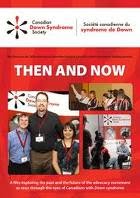 Also from the Canadian Down Syndrome Society in the library is Then and Now, a film which explores the views of self-advocates and how they are working to change the community. They speak about inclusion, relationships & marriage, housing, employment, education, sports & recreation and all aspects of living.
If you'd like to borrow the DVD, read any of the journal articles or borrow anything else from the library, just call or email.
Puberty resources group purchase
 Many at the puberty workshop expressed interest in buying some of the excellent resources put out by Secret Girls Business. We are making a group order so that we can receive a discount. If anyone is interested in purchasing Secret Girls' Business, Special Girls' Business, More Secret Girls' Business, Puberty and Special Girls, Special Boys' Business or Secret Boys' Business please call the library on 9841 4410 or email. Prices for the "Special..." books range from $30.00- $40.00 depending on how many we order. Prices for the "Secret..." books range from $11.25-$17.00.
To find out more about these books, go to our previous blogs here, here and the Secret Girls Business Website. Or you can just borrow them from the library (borrowing period is 4 weeks). Just call or email.
Wednesday, 25 August 2010

Tuesday, 24 August 2010
Surf Education Program for People with Disabilities: Maroubra SLSC

We know that lots of kids with Down syndrome love Nippers. Here is an opportunity for more to join:
Maroubra SLSC in conjunction with their Lifesaving partners Maroubra Seals Sports and Community Club is conducting a surf education program for people with disabilities.
The program is designed for children with physical and intellectual disabilities with the aim of having fun while learning about beach and water safety.
The participants will learn all aspects of beach safety from Maroubra Surf Lifesaving Clubs volunteer lifesavers.
Read all about the program here on the Maroubra SLSC website.
Subscribe to:
Posts (Atom)